

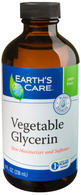
Usage: Use a small amount of Earth’s Care Vegetable Glycerin for massage or as needed to nourish and hydrate cracked or chapped skin. Dilute Vegetable Glycerin with water for use on sensitive skin.
Ingredients: Glycerin
The information provided is for educational purposes only and is not intended to replace professional medical advice. Always consult with a qualified healthcare provider for personalized medical guidance.
 This content was generated by AI. Please use your own judgment and consult the manufacturer for more accurate information.
Vegetable Glycerin: A Detailed Review
Vegetable glycerin, also known as glycerol, is a clear, odorless liquid derived from plant oils, typically palm, soy, or coconut oil. It is commonly used in the food, pharmaceutical, and cosmetic industries due to its versatile properties.
Benefits of Vegetable Glycerin:
- Moisturizing Agent: Vegetable glycerin is a humectant, meaning it attracts moisture to the skin. It helps to hydrate and soften the skin, making it a popular ingredient in skincare products.
- Safe for Consumption: Vegetable glycerin is generally recognized as safe by the FDA and can be used in food and beverages as a sweetener or preservative.
- Non-Toxic and Non-Allergenic: It is well-tolerated by most people and does not cause allergic reactions in the majority of individuals.
- Stable and Versatile: Vegetable glycerin has a long shelf life and can be used in a wide range of products, from lotions and soaps to cough syrups and toothpaste.
Potential Drawbacks:
While vegetable glycerin is generally considered safe for external and internal use, some individuals may experience mild side effects such as digestive issues or allergic reactions. It is important to use it in moderation and consult a healthcare professional if you have any concerns.
Conclusion:
Overall, vegetable glycerin is a versatile and safe ingredient with numerous benefits for skincare, food, and pharmaceutical products. When used appropriately, it can enhance the quality and efficacy of various formulations.
The information provided is for educational purposes only and is not intended to replace professional medical advice. Always consult with a qualified healthcare provider for personalized medical guidance.
This content was generated by AI. Please use your own judgment and consult the manufacturer for more accurate information.
Ingredients in Vegetable Glycerin
- Glycerin (Vegetable Derived)
The information provided is for educational purposes only and is not intended to replace professional medical advice. Always consult with a qualified healthcare provider for personalized medical guidance.
This content was generated by AI. Please use your own judgment and consult the manufacturer for more accurate information.
Health Benefits of Vegetable Glycerin
-
Moisturizing Properties
Vegetable glycerin is a humectant, which means it attracts moisture to the skin. It helps to keep the skin hydrated and prevents dryness.
-
Soothing Irritated Skin
Due to its moisturizing properties, vegetable glycerin can help soothe and calm irritated or inflamed skin, making it beneficial for conditions like eczema and psoriasis.
-
Anti-Aging Effects
Vegetable glycerin can improve the skin's elasticity and firmness, reducing the appearance of fine lines and wrinkles, and promoting a more youthful complexion.
-
Wound Healing
Studies suggest that vegetable glycerin may aid in wound healing by promoting the growth of new skin cells and protecting the wound from infection.
-
Alleviating Constipation
When taken orally, vegetable glycerin can act as a mild laxative, helping to relieve constipation by softening stools and promoting bowel movements.
Source: Healthline - Vegetable Glycerin
The information provided is for educational purposes only and is not intended to replace professional medical advice. Always consult with a qualified healthcare provider for personalized medical guidance.
This content was generated by AI. Please use your own judgment and consult the manufacturer for more accurate information.
Using Vegetable Glycerin for Maximum Benefits
Vegetable Glycerin is a versatile ingredient that can be used in various ways to benefit your health. Here are some recommended ways to use Vegetable Glycerin:
1. Moisturizer:
Vegetable Glycerin is a great natural moisturizer that can help hydrate and nourish your skin. You can apply a small amount of Vegetable Glycerin directly to your skin or mix it with your favorite lotion or cream for added hydration.
2. Hair Care:
Adding Vegetable Glycerin to your hair care routine can help moisturize and strengthen your hair. You can mix Vegetable Glycerin with water in a spray bottle and use it as a leave-in conditioner or add it to your shampoo or conditioner for extra hydration.
3. Oral Health:
Vegetable Glycerin can also be used to improve oral health. You can mix Vegetable Glycerin with water and use it as a mouthwash to help freshen breath and promote healthy gums.
4. DIY Beauty Products:
You can use Vegetable Glycerin to create your own DIY beauty products such as facial serums, body scrubs, and lip balms. Mixing Vegetable Glycerin with other natural ingredients can help enhance the benefits of your homemade beauty products.
It is important to note that Vegetable Glycerin is generally safe for external use, but it is recommended to do a patch test before using it on your skin or hair to check for any allergic reactions.
For more information on the benefits and uses of Vegetable Glycerin, you can refer to the manufacturer's website or consult with a healthcare professional.
The information provided is for educational purposes only and is not intended to replace professional medical advice. Always consult with a qualified healthcare provider for personalized medical guidance.
This content was generated by AI. Please use your own judgment and consult the manufacturer for more accurate information.
Comparison of Vegetable Glycerin with Similar Products
Vegetable Glycerin
Vegetable Glycerin is a clear, odorless liquid derived from plant oils, typically palm, soy, or coconut oil. It is commonly used in food, pharmaceuticals, and personal care products.
Source: Chemours - Vegetable Glycerin
Propylene Glycol
Propylene Glycol is a synthetic liquid used in various applications such as food, pharmaceuticals, and e-liquids. It is colorless, odorless, and has a slightly sweet taste.
Source: Chemours - Propylene Glycol
Glycerol
Glycerol, also known as glycerin or glycerine, is a simple polyol compound that is colorless, odorless, and sweet-tasting. It is used in food, pharmaceuticals, and personal care products.
Source: PubChem - Glycerol
The information provided is for educational purposes only and is not intended to replace professional medical advice. Always consult with a qualified healthcare provider for personalized medical guidance.
This content was generated by AI. Please use your own judgment and consult the manufacturer for more accurate information.
Alternative to Vegetable Glycerin: Propylene Glycol
Propylene glycol is a common alternative to vegetable glycerin in various products. It is a synthetic compound that is odorless, colorless, and tasteless. Propylene glycol is commonly used in food, pharmaceuticals, and personal care products.
According to the Dow Chemical Company, a leading manufacturer of propylene glycol, the compound is considered safe for use in a wide range of applications. It is commonly used as a solvent, humectant, and preservative in various products.
When used in vaping products, propylene glycol is known for its ability to produce a stronger throat hit compared to vegetable glycerin. It also carries flavors well and has a thinner consistency.
The information provided is for educational purposes only and is not intended to replace professional medical advice. Always consult with a qualified healthcare provider for personalized medical guidance.