

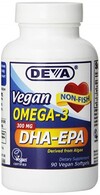
DEVA is proud to offer its new product that is rich in both DHA and EPA derived from a completely vegetarian source (i.e. Schizochytrium sp microalgae). Algal Omega-3 oil has been commercially available for a while but it did not contain meaningful amounts of EPA. This new product contains both DHA and EPA from microalgae that is grown in a controlled environment, eliminating the risk of oceanic contamination. From start to finish, it is produced in an FDA-inspected facility, under current Good Manufacturing Practice (cGMP) regulations with controls in place to ensure the highest quality product. Because the algae is grown outside of the ocean, there is no risk of ocean-borne contaminants such as PCBs and dioxins.
DEVA DHA & EPA oil is encapsulated in delayed release vegetarian capsules to make sure there is no aftertaste. This also helps prevent repeat issues associated with Omega-3 products.
DEVA Omega-3 DHA & EPA is 100% vegan, vegetarian and is certified by the Vegan Society, the non-profit organization that actually invented the word "vegan".
Directions: For adults take one (1) or two (2) capsules a day with food or as directed by a health care professional.
Ingredients: 1 capsule supplies:
Microalgae Oil 500 mg
which typically provides:
Total DHA+EPA 200 mg
DHA (Docosahexaenoic acid) 120 to 140 mg
EPA (Eicosapentaenoic acid) 60 to 80 mg
Other Ingredients: Vegan Capsule (plant cellulose), Oleic Acid, Lemon Oil, Mixed Tocopherols, Silicon Dioxide, Sunflower Lecithin, Rosemary Extract, Ascorbyl Palmitate, Citric Acid (All of the ingredients are from plant / mineral sources).
Free of GMOs, yeast, wheat, gluten, hexane, dairy, corn, egg, sugar, salt, starch, preservatives; animal products, byproducts or dervatives.
Warning: Always consult your doctor before taking any dietary supplement.
The information provided is for educational purposes only and is not intended to replace professional medical advice. Always consult with a qualified healthcare provider for personalized medical guidance.
Ingredients in Vegan Omega-3 EPA DHA (Algae)
- Algal Oil (from Schizochytrium sp.)
- Vegetable glycerin
- Purified water
- Sunflower oil
- Natural mixed tocopherols (preservative)
- Ascorbyl palmitate (antioxidant)
- Rosemary extract
The information provided is for educational purposes only and is not intended to replace professional medical advice. Always consult with a qualified healthcare provider for personalized medical guidance.
Health Benefits of Vegan Omega-3 EPA DHA (Algae)
-
Supports Heart Health
Omega-3 fatty acids, specifically EPA and DHA, have been shown to reduce the risk of heart disease by lowering triglycerides, reducing inflammation, and improving endothelial function.
-
Brain Health and Cognitive Function
EPA and DHA are crucial for brain health and cognitive function. They play a role in neurotransmitter function, neuroplasticity, and reducing inflammation in the brain, which may help protect against cognitive decline.
-
Supports Eye Health
DHA is a major structural component of the retina in the eye, and adequate intake of DHA is important for maintaining optimal eye health and vision.
-
Anti-Inflammatory Properties
EPA and DHA have potent anti-inflammatory effects in the body, which can help reduce inflammation associated with chronic diseases such as arthritis, diabetes, and inflammatory bowel disease.
-
Supports Immune Function
Omega-3 fatty acids play a role in regulating immune function and inflammation, which can help support a healthy immune system.
The information provided is for educational purposes only and is not intended to replace professional medical advice. Always consult with a qualified healthcare provider for personalized medical guidance.
How to Best Use Vegan Omega-3 EPA DHA (Algae)
Omega-3 fatty acids are essential nutrients that play a crucial role in maintaining overall health, especially heart health and brain function. Vegan Omega-3 EPA DHA derived from algae is a great plant-based source of these important fatty acids. Here are some tips on how to maximize the benefits of Vegan Omega-3 EPA DHA:
- Follow the Recommended Dosage: It is important to follow the recommended dosage provided by the manufacturer. Typically, the recommended dosage is one to two capsules per day, but this may vary depending on the product.
- Take with Food: Omega-3 fatty acids are better absorbed when taken with a meal that contains some healthy fats. Taking your Vegan Omega-3 EPA DHA supplement with a meal can help enhance absorption.
- Be Consistent: For optimal results, it is important to be consistent with your supplement intake. Incorporate it into your daily routine to ensure you are getting a consistent supply of Omega-3 fatty acids.
- Consult with a Healthcare Provider: If you have any specific health concerns or conditions, it is always a good idea to consult with a healthcare provider before starting any new supplement regimen, including Vegan Omega-3 EPA DHA.
By following these tips, you can ensure that you are maximizing the benefits of Vegan Omega-3 EPA DHA and supporting your overall health and well-being.
For more information and specific recommendations on how to use Vegan Omega-3 EPA DHA, you can refer to the product guidelines provided by the manufacturer or consult with a healthcare professional.
The information provided is for educational purposes only and is not intended to replace professional medical advice. Always consult with a qualified healthcare provider for personalized medical guidance.
Comparison of Vegan Omega-3 EPA DHA (Algae) with Similar Products
Product Overview:
When comparing Vegan Omega-3 EPA DHA derived from algae with similar products, it is important to consider the source, purity, potency, and sustainability of the supplement.
Vegan Omega-3 EPA DHA (Algae):
- Source: Algal oil derived from marine algae
- Purity: Free from contaminants such as heavy metals and PCBs
- Potency: Provides a concentrated dose of EPA and DHA
- Sustainability: Algae-based omega-3 is a more sustainable option compared to fish oil
Comparison with Fish Oil:
Fish oil is a common source of omega-3 fatty acids, but concerns about overfishing and environmental contaminants have led many consumers to seek plant-based alternatives like algae-derived omega-3.
Comparison with Krill Oil:
Krill oil is another source of omega-3 fatty acids, but algae-based supplements are considered a purer and more sustainable option. Algae-derived omega-3 also tends to have higher concentrations of EPA and DHA.
Conclusion:
Overall, Vegan Omega-3 EPA DHA derived from algae stands out as a clean, potent, and sustainable source of essential fatty acids, making it a favorable choice for individuals looking to supplement their diet with omega-3.
The information provided is for educational purposes only and is not intended to replace professional medical advice. Always consult with a qualified healthcare provider for personalized medical guidance.
Alternative to Vegan Omega-3 EPA DHA (Algae)
While Vegan Omega-3 EPA DHA sourced from algae is a great option for obtaining essential fatty acids, there are other alternatives available that can also provide similar benefits:
-
Flaxseed Oil
Flaxseed oil is rich in alpha-linolenic acid (ALA), a type of omega-3 fatty acid. It can be a good alternative for vegans looking to increase their omega-3 intake. However, it is important to note that ALA needs to be converted into EPA and DHA in the body, which may not be as efficient as consuming pre-formed EPA and DHA directly.
-
Walnuts
Walnuts are a plant-based source of omega-3 fatty acids, particularly ALA. Including walnuts in your diet can help boost your omega-3 intake. However, similar to flaxseed oil, the conversion of ALA to EPA and DHA may not be as efficient.
-
Chia Seeds
Chia seeds are another good source of ALA omega-3 fatty acids. They can be easily incorporated into smoothies, yogurt, or oatmeal to increase your omega-3 intake. Chia seeds also provide other nutritional benefits such as fiber and protein.
While these alternatives can help increase your omega-3 intake, it is important to consult with a healthcare provider or a registered dietitian to ensure you are meeting your nutritional needs.
The information provided is for educational purposes only and is not intended to replace professional medical advice. Always consult with a qualified healthcare provider for personalized medical guidance.